
Identical twins will have exactly the same genome (the entire set of DNA instructions in a single cell1) as each other. So why is it that they can be so different, even in traits that have a significant genetic component? Although nature vs nurture can have something to do with this, a deeper answer lies within the recent discoveries of epigenetics. Epigenetics refers to the processes that tell our cells how and when to read the DNA information.2
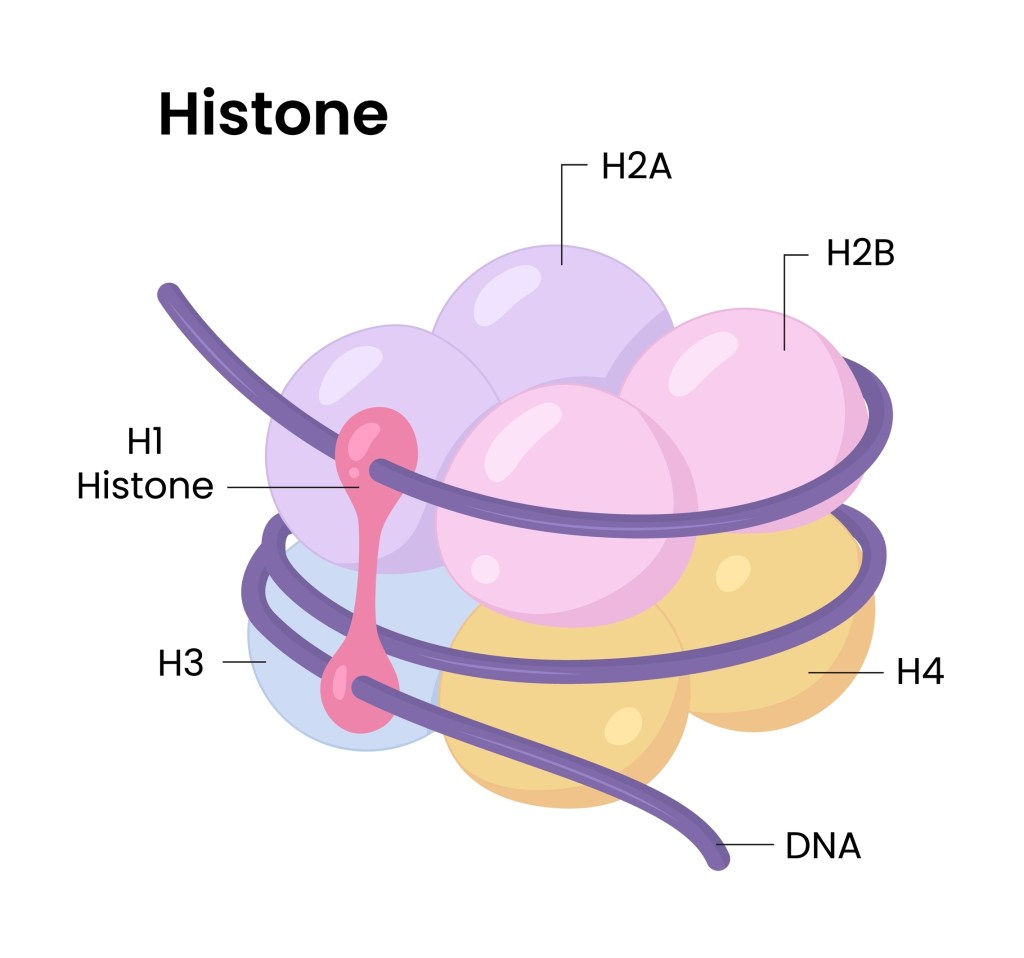
In our cells, DNA is wrapped around proteins. This creates a structure called a nucleosome, which consists of DNA tightly coiled around 8 histone proteins. Histones have long extensions called histone tails, which protrude from the nucleosome core. Modifications to the histone tails and the DNA itself are the epigenetics marks which allow the specific gene to be either silenced or expressed. The entire set of epigenetic marks within an organism’s genome is know as their epigenome. Two modifications will be talked about in this article, however, there are many more that are rapidly being discovered.
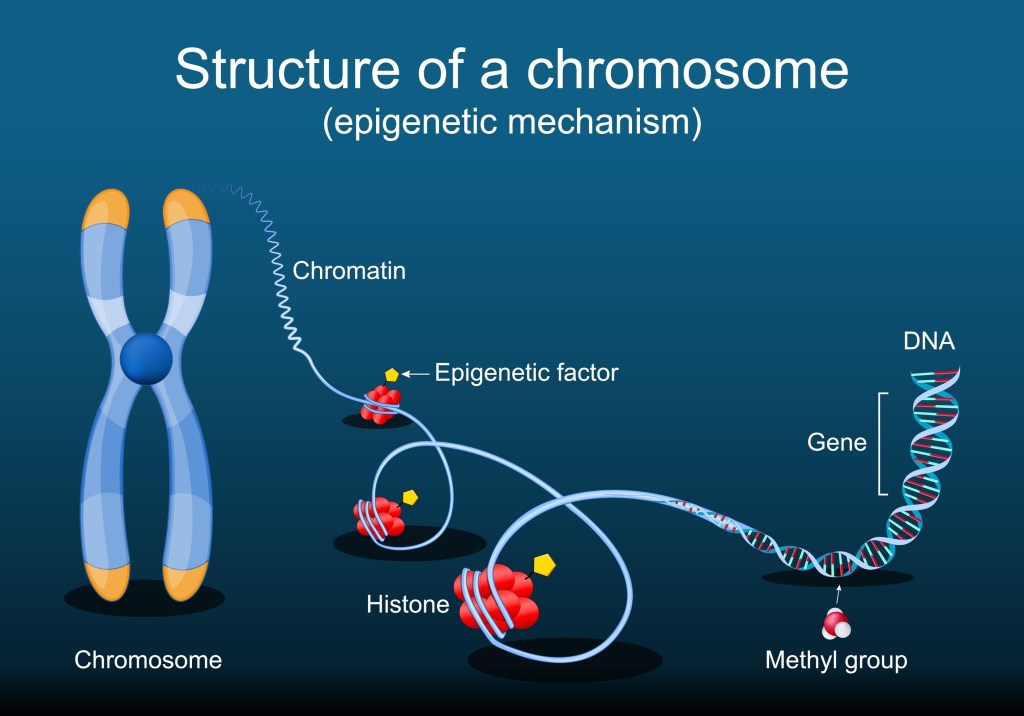
The first modification is DNA methylation. This involves the transfer of a methyl group (-CH3) onto the 5th carbon of a cytosine base to form
5-methylcytosine.3 DNA methylation regulates gene expression because the methyl group is bound by proteins, and can prevent transcription factors binding, resulting in the DNA strand not being copied. Therefore, high levels of DNA methylation result in low expression of that specific gene (it is silenced).
Secondly, we will look at histone modifications. One type of modification is the addition of an acetyl group (-COCH3) to the histone proteins. Histones are positively charged, while DNA is negatively charged – this makes them attracted to one another. When the acetyl group is added, the positive charge of the histones is weakened, so the DNA is not as attracted to them. This means that DNA unwinds from the nucleosome and becomes more open and easily transcribed – resulting in higher expression of the gene (it is amplified). Other histone modifications include methylation, phosphorylation and ubiquitylation.4
These epigenetic marks can be influenced by many factors, such as diet, chemical exposure and medication. The resulting epigenetic changes may eventually lead to disease – for example a tumour suppressing gene is silenced. As twins get older, their epigenomes diverge, affecting the way they age and their susceptibility to disease. This is part of the reason why genetically identical twins have very different lives.
Bibliography:
- Guerrero-Bosagna, C (2016), What Is Epigenetics? [online] Last accessed 04/04/2026: https://www.youtube.com/watch?v=_aAhcNjmvhc
References:
- National Human Genome Research Institute (2019), Talking Glossary of Genomic and Genetic Terms. [online] Last accessed 02/04/2026: https://www.genome.gov/genetics-glossary/Genome
- Uno, E., Berry, D (2012), X Inactivation and Epigenetics. [online] Last accessed 02/04/2026: https://www.wehi.edu.au/wehi-tv/x-inactivation-and-epigenetics/
- Moore, L.D., Le, T., Fan, G. (2012) DNA Methylation and Its Basic Function. [online] Last accessed 03/04/2026: https://www.nature.com/articles/npp2012112
- Abcam (2024), Histone Modifications. [online] Last accessed 03/04/2026: https://www.abcam.com/en-us/technical-resources/guides/epigenetics-guide/histone-modifications

