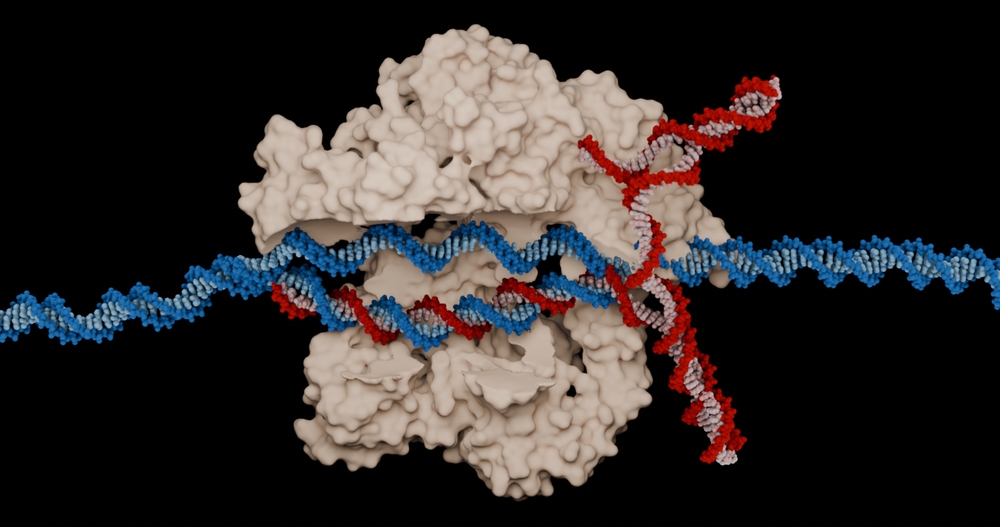
CRISPR is a genome engineering technology that allows researchers to make precise changes to genetic material across a wide range of organisms. CRISPR stands for Clustered Regularly Interspaced Short Palindromic Repeats and was first discovered as part of a natural defence mechanism used by bacteria to recognise and destroy viral DNA.1
The CRISPR system consists of two components: the Cas9 enzyme that cuts DNA and a guide RNA that can recognise the sequence of DNA that needs to be edited.
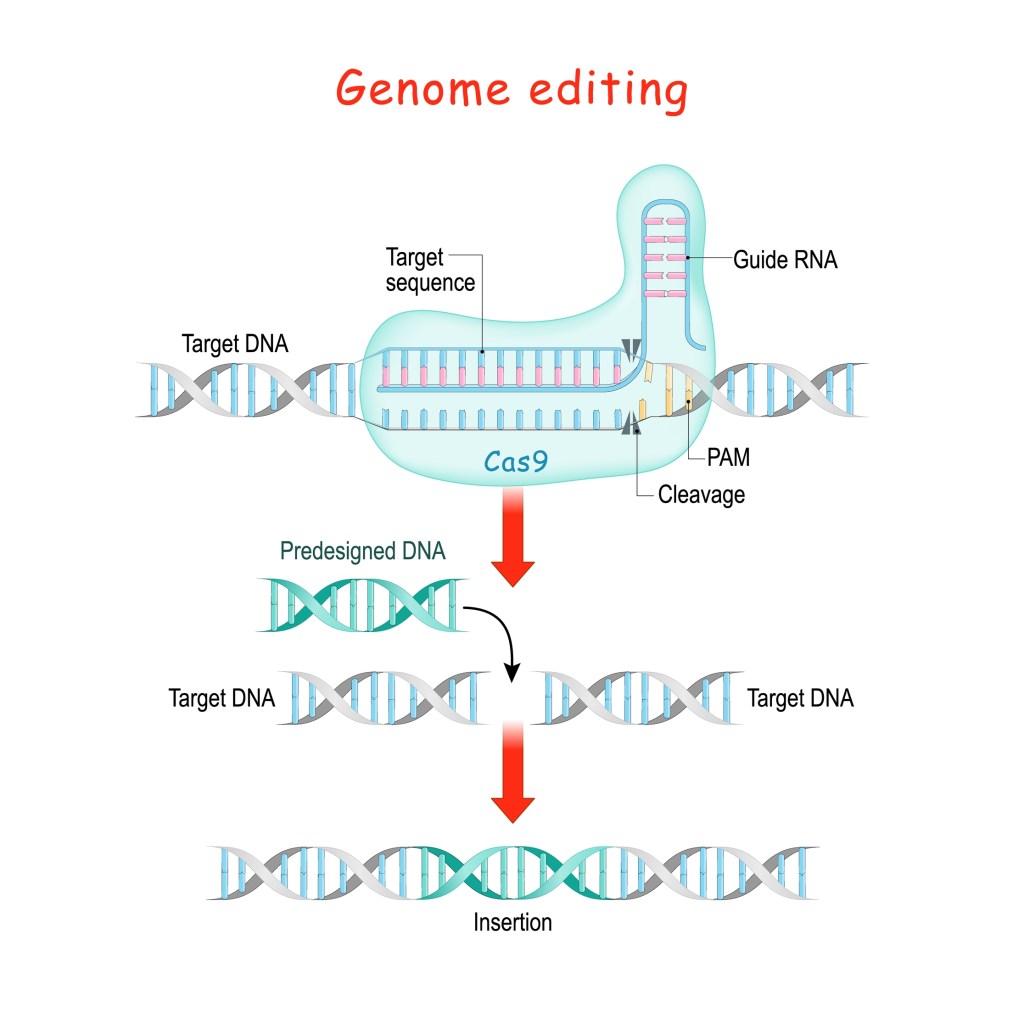
Scientists first identify the sequence of DNA bases that is causing a health problem (e.g sickle cell disease), then they create a specific guide RNA that directs Cas9 to that sequence. Typically, the guide RNAs consist of two RNA strands: Trans-activating CRSIPR RNA, which binds to Cas9 as a scaffold, and CRISPR RNA, which is complementary to the target DNA sequence. The complex can now be introduced into target cells. For the Cas9 complex to bind to its target, a protospacer adjacent motif (PAM) must be present. A PAM is a series of nucleotide bases located immediately downstream of the target DNA. When recognised, Cas9 will create a double strand break in the DNA, causing the cell to employ DNA repair pathways. These can be used to either knock out genes (through non-homologous end joining) or add in genes (through homology directed repair).1
The CRISPR technique can be used with the potential to cure a range of genetic diseases, including blood disorders and cancer. CRISPR can also be used to generate CAR T cells, a form of immunotherapy used to treat cancer as they can more efficiently target and destroy cancer cells. Treatments can be ex vivo, where collected cells are edited outside the body then administered to the patient, or in vitro, where the therapy is delivered directly to a target organ.2
Bibliography:
Mayo Clinic (2018), CRSIPR Explained [online]. Last accessed 11/06/2026 https://www.youtube.com/watch?v=UKbrwPL3wXE
References:
- Synthego (2019), What Is CRISPR: The Ultimate Guide to CRISPR Mechanisms, Applications, Methods & More [Online]. Last accessed 11/06/2026
https://www.synthego.com/learn/crispr/ - CRISPR Therapeutics (2023), Gene Editing [online]. Last accessed 11/06/2026 https://crisprtx.com/gene-editing

